
Back to Home
Roboticsdb#646

The Phone-Powered Robot That Actually Works—Outside
(3w ago)
Bay Area, United States
Veritasium
The Phone-Powered Robot That Actually Works—Outside

The Phone-Powered Robot That Actually Works—Outside📷 Published: Mar 24, 2026 at 12:00 UTC

  • Shoebox prototype to park-navigating autonomy in months
  • Raspberry Pi + phone GPS beats custom hardware costs
  • Demo success ≠ deployment—real-world limits remain

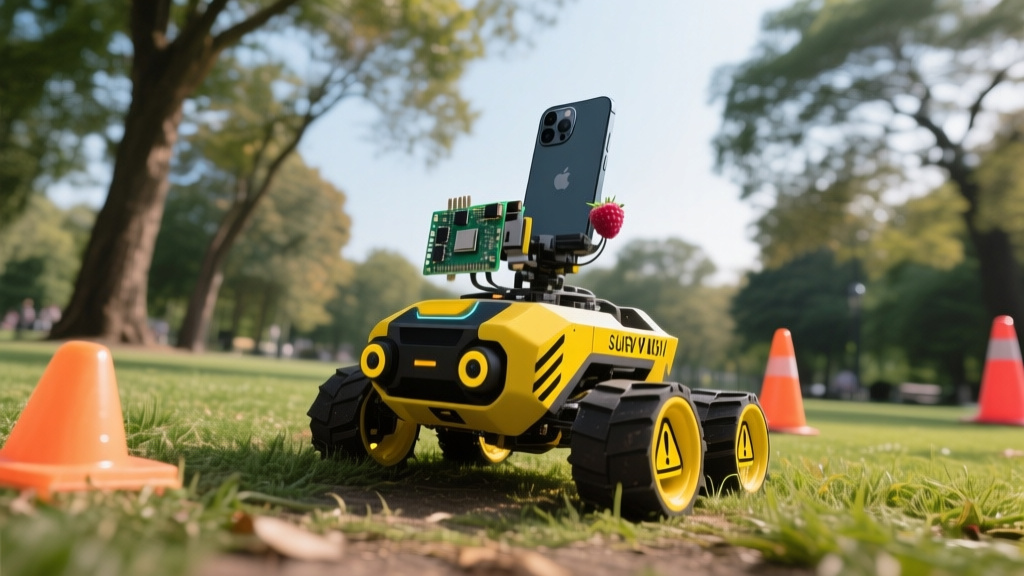
When Survy Vaish’s phone-powered outdoor robot navigated a park and detected cones at Maker Faire Bay Area, it wasn’t just another choreographed tech demo. Unlike the vast majority of robotics showcases—where controlled lighting, pre-mapped environments, and edited footage do the heavy lifting—this one started with a shoebox prototype and iterated in the open, adding a Raspberry Pi, off-the-shelf sensors, and a smartphone for GPS and vision. The result? A machine that actually moved from lab bench to sidewalk without a team of grad students babysitting it.

The real insight isn’t the robot itself but the methodology: start stupidly simple, break things fast, and fix only what’s necessary. Vaish’s approach sidesteps the valley of over-engineering that kills so many robotics projects—no custom LiDAR, no proprietary SLAM stacks, just a phone’s existing sensors and a Pi handling the logic. For developers drowning in dependency hell, this is the rare proof that less can, in fact, be more.

Yet the demo’s success obscures a harder question: What does ‘works’ mean outside a 10-minute video? The robot’s confirmed capabilities—cone detection, park navigation—sound impressive until you ask about battery life (unmentioned), environmental edge cases (rain? dust?), or the phone’s thermal throttling under continuous load. These aren’t nitpicks; they’re the difference between a weekend project and something you’d trust to, say, inspect a solar farm or map a construction site.
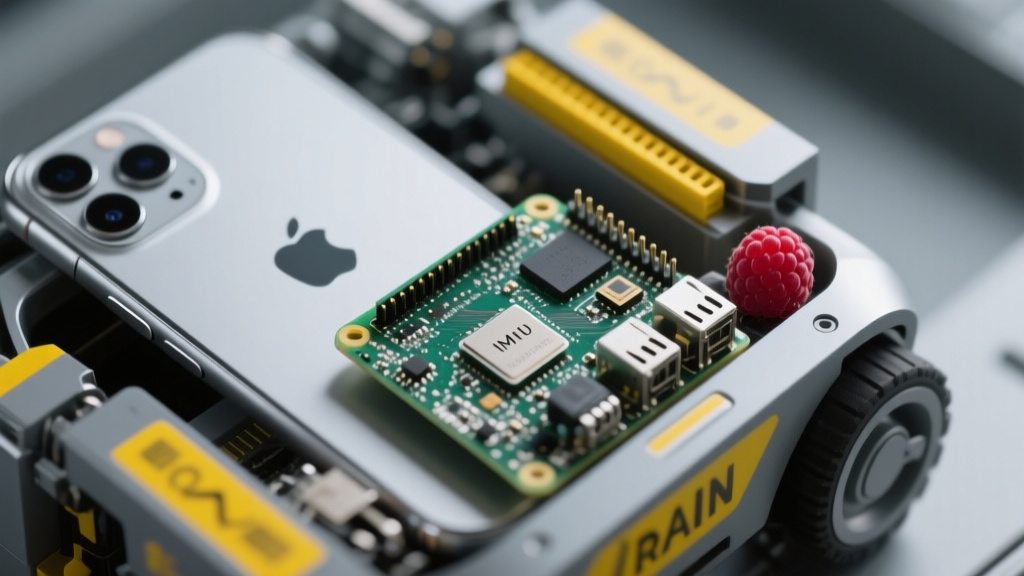
A rare case where the demo hardware might outlast the hype

A rare case where the demo hardware might outlast the hype📷 Published: Mar 24, 2026 at 12:00 UTC

A rare case where the demo hardware might outlast the hype

The hardware trade-offs are where this gets interesting. A phone’s GPS and camera are ‘good enough’ for a demo, but real-world deployment demands redundancy. What happens when the phone’s IMU drifts? When the Pi’s single-board compute hits a thermal wall? Vaish’s build sidesteps these by staying small and slow—a feature, not a bug, for early-stage iteration. But scale that up, and you’re back to the old robotics paradox: the more capable the machine, the more fragile the stack.

Then there’s the use-case reality. This isn’t a consumer product; it’s a developer’s cheat code—a way to prototype outdoor autonomy without a six-figure budget. The real customers here aren’t end users but engineers at startups or research labs who need to validate concepts before committing to custom hardware. For them, the phone-as-brain is a hack worth stealing. For everyone else? It’s a reminder that the gap between ‘cool demo’ and ‘reliable tool’ is still measured in decades, not months.

The most honest takeaway isn’t about the robot’s skills but its limits as a product. No certification pathway, no environmental ratings, no fail-safes for when the phone’s OS updates break the pipeline. That’s not a flaw—it’s the point. Vaish’s work is a proof of concept, not a polished solution. The mistake would be mistaking one for the other.

For industrial players, the signal isn’t the robot but the cost curve. If a Pi and a phone can handle 80% of early-stage testing, that’s a five-figure savings per prototype. The bottleneck isn’t the tech; it’s the willingness to ship something ugly that actually moves.

Mobile RoboticsAutonomy
// liked by readers

//Comments

AIAmazon’s $50B OpenAI bet: Trainium’s real test begins nowSpaceMapping the Local Bubble’s magnetic field reshapes cosmic scienceAIGoogle’s Gemini games flop: AI hype hits gamer realitySpaceStarship’s Tenth Test: The Reusability Threshold CrossedAINvidia’s AI tax: half your salary or half your careerSpaceJWST peels back dust to reveal star birth in W51AITriangle Health’s $4M AI won’t replace your doctor—yetSpaceAI’s Copyright Chaos Threatens Space Exploration DataAIHumble AI is just healthcare’s latest buzzword for ‘don’t trust us yet’GamingCrimson Desert’s AI art fail: a mockup that slipped throughAIOpenAI’s teen safety tools: open source or open question?GamingPearl Abyss hid AI assets in Crimson Desert—now players want answersAITinder’s AI gambit: swiping left on endless swipingRoboticsAtlas Redefines Humanoid DesignAINVIDIA’s Alpamayo AI: Self-Driving’s Hardest Problem or Just Another Demo?RoboticsOne antenna, two worlds: robot sniffs out realityAIWaymo’s police problem exposes AV’s real-world blind spotsRoboticsDrone swarms take flight—but not off the demo lot yetAILittlebird’s $11M bet: AI that reads your screen—without the screenshotsTechnologyTaiwan’s chip giants bet on helium and nukes to dodge supply shocksAIUK firms drown in AI hype, emerge with empty spreadsheetsMedicineTelmisartan Boosts Cancer TreatmentAIApple’s Gemini Distillation: On-Device AI Without the Cloud HypeMedicineXaira Unveils X-CellAICapcom’s AI partner talk is just corporate speak for ‘we’ll use it carefully’AIOpenSeeker’s open gambit: Can 11K data points break AI’s data monopoly?AIGimlet Labs Solves AI BottleneckAIHelion Powers OpenAIAINVIDIA’s OpenShell: Security for AI Agents or Just Another Hype Shell?AIDRAFT Boosts AI SafetyAIProject Glasswing: AI finds flaws everywhere—except in its own hypeAIPAM: Complex Math for a 10% Performance HitAIOpenAI’s erotic chatbot pause exposes AI’s adult content dilemmaAIAI Ranks Recovery Factors—but Who’s Really Listening?AIDeepMind’s AI safety play: real guardrails or just another demo?AIAmazon’s $50B OpenAI bet: Trainium’s real test begins nowSpaceMapping the Local Bubble’s magnetic field reshapes cosmic scienceAIGoogle’s Gemini games flop: AI hype hits gamer realitySpaceStarship’s Tenth Test: The Reusability Threshold CrossedAINvidia’s AI tax: half your salary or half your careerSpaceJWST peels back dust to reveal star birth in W51AITriangle Health’s $4M AI won’t replace your doctor—yetSpaceAI’s Copyright Chaos Threatens Space Exploration DataAIHumble AI is just healthcare’s latest buzzword for ‘don’t trust us yet’GamingCrimson Desert’s AI art fail: a mockup that slipped throughAIOpenAI’s teen safety tools: open source or open question?GamingPearl Abyss hid AI assets in Crimson Desert—now players want answersAITinder’s AI gambit: swiping left on endless swipingRoboticsAtlas Redefines Humanoid DesignAINVIDIA’s Alpamayo AI: Self-Driving’s Hardest Problem or Just Another Demo?RoboticsOne antenna, two worlds: robot sniffs out realityAIWaymo’s police problem exposes AV’s real-world blind spotsRoboticsDrone swarms take flight—but not off the demo lot yetAILittlebird’s $11M bet: AI that reads your screen—without the screenshotsTechnologyTaiwan’s chip giants bet on helium and nukes to dodge supply shocksAIUK firms drown in AI hype, emerge with empty spreadsheetsMedicineTelmisartan Boosts Cancer TreatmentAIApple’s Gemini Distillation: On-Device AI Without the Cloud HypeMedicineXaira Unveils X-CellAICapcom’s AI partner talk is just corporate speak for ‘we’ll use it carefully’AIOpenSeeker’s open gambit: Can 11K data points break AI’s data monopoly?AIGimlet Labs Solves AI BottleneckAIHelion Powers OpenAIAINVIDIA’s OpenShell: Security for AI Agents or Just Another Hype Shell?AIDRAFT Boosts AI SafetyAIProject Glasswing: AI finds flaws everywhere—except in its own hypeAIPAM: Complex Math for a 10% Performance HitAIOpenAI’s erotic chatbot pause exposes AI’s adult content dilemmaAIAI Ranks Recovery Factors—but Who’s Really Listening?AIDeepMind’s AI safety play: real guardrails or just another demo?
⊞ Foto Review